
ChatGPT has no ranking you can claim or buy. When a buyer asks for a recommendation, it searches the web and names businesses from the pages it finds. So let OpenAI’s crawler in, make your homepage say plainly what you do, get onto the lists and comparisons in your category and count how often you’re named over many runs.
How does ChatGPT decide which businesses to name?
It searches first. When ChatGPT search uses a search partner, OpenAI says it “typically rewrites your query into one or more targeted queries” and sends them to that partner, then ranks what comes back.
To see those searches, we asked ChatGPT 21 questions buyers ask when looking for an SEO or AI visibility agency for a software company: 102 answers in all, on November 10, 2026. ChatGPT searched the web in every one, about twice per answer. 110 of its 203 searches (54%) added “2026”, and 63 (31%) used words like best, top, vs. or alternatives. A typical one: “best B2B SaaS SEO agencies managed SEO services 2026 case studies pricing”.
Those searches describe the buyer’s need, and they rarely name a brand. In only 16 of the 102 answers did ChatGPT search a brand’s name before mentioning it. If it doesn’t already know your name, your way in is the pages those searches find.
How do you make sure ChatGPT can find your site?
- Allow OAI-SearchBot in robots.txtIt’s the crawler behind ChatGPT search. OpenAI says sites that block it won’t be shown in ChatGPT search answers. A change to robots.txt takes about 24 hours to count.
- Make sure your bot protection lets OpenAI inBot protection at your host or CDN (the service that speeds up your site) can turn the crawler away even when robots.txt lets it in. OpenAI publishes the addresses to allow.
- Know which bot is whichGPTBot collects training data, and blocking it is a separate setting from search. ChatGPT-User is a visit a person asked for, and it doesn’t decide what shows in search.
- Get indexed in Bing tooChatGPT sometimes sends its searches to partners, and for those OpenAI points to Microsoft’s privacy statement. So add your site to Bing Webmaster Tools, and use IndexNow to tell Bing right away when a page changes.
The rest is ordinary indexing. Our guide to SEO for startups has the week-one steps.
Which pages does ChatGPT cite?
Across the 102 answers, ChatGPT cited 1,059 links. Nearly half went to companies’ own homepages, and about a quarter to lists and comparisons. 79 of the 102 answers (77%) cited at least one list or comparison page.
- Your homepage, in plain wordsWhen ChatGPT names a company, the homepage is the link it gives most. Its first lines should say what you sell and who it’s for. A tagline that never names your category gives it nothing to quote.
- Your own comparison and alternatives pages“[Competitor] alternatives” and “[you] vs. [competitor]” use the same words ChatGPT searches with. On our Results page, 5 of 6 client wins came right after a comparison, alternatives or list page. ChatGPT named Tartan in 19% of the K-12 buyer questions we track on October 21, 2026, and in 70% on November 4, after we shipped KnowBe4 and Proofpoint comparison pages. Other changes shipped in those weeks too, so it’s not proof. They’re still the first pages we’d write.
- Dates you keep currentMore than half its searches added the year. When a page changes, update it and show the date.
How do you get onto other people’s lists?
Most of the lists ChatGPT reads belong to someone else: publishers, agencies and review blogs writing “best X for Y”. Ask ChatGPT your buyers’ questions and open its sources to find them. Then ask each author to add you where you’re a real fit, and send what they need: what you do, who it’s for and your price. Don’t pay for a spot on a list or buy reviews. Directories barely showed up: 3 of the 1,059 links.
Publish your own list too, with you on it. We did: our list of SaaS SEO agencies.
Should you claim your business in ChatGPT?
Yes, if you can. Businesses in ChatGPT launched in beta the same day we asked those questions. In Business Hub you claim and verify your business, then update key details and add product feeds with pricing and availability. A claimed profile gets a blue check. Who can claim depends on your industry, location and OpenAI’s checks, and it starts with businesses that have a website.
Business Hub also shows how often ChatGPT mentions you, the clicks to your site and “discovery topics”: the themes of conversations where your site was cited.
We claimed FirstIndex’s profile. From October 14 to November 10, 2026, Business Hub counted 282 ChatGPT answers that referenced firstindex.com, and 6 clicks to it. That’s about 2 clicks for every 100 mentions. If you only watch your traffic from ChatGPT, you miss almost every answer that points to you.
OpenAI is blunt about what claiming won’t do: “ChatGPT continues to make independent recommendations and comparisons. Claiming does not guarantee higher placement or sales.” Ads don’t buy a spot in the answers either. An eligible US ecommerce or online service business can sponsor its Business Agent, and sponsored placements are labeled and kept separate from ChatGPT’s answers. Claim it for accurate facts, not for a ranking.
How do you claim your business in ChatGPT?
Business Hub isn’t built for software companies yet, but you can work around that. Here’s how we did it.
- Open Business HubSign in to ChatGPT, go to chatgpt.com/business-hub and add a business.
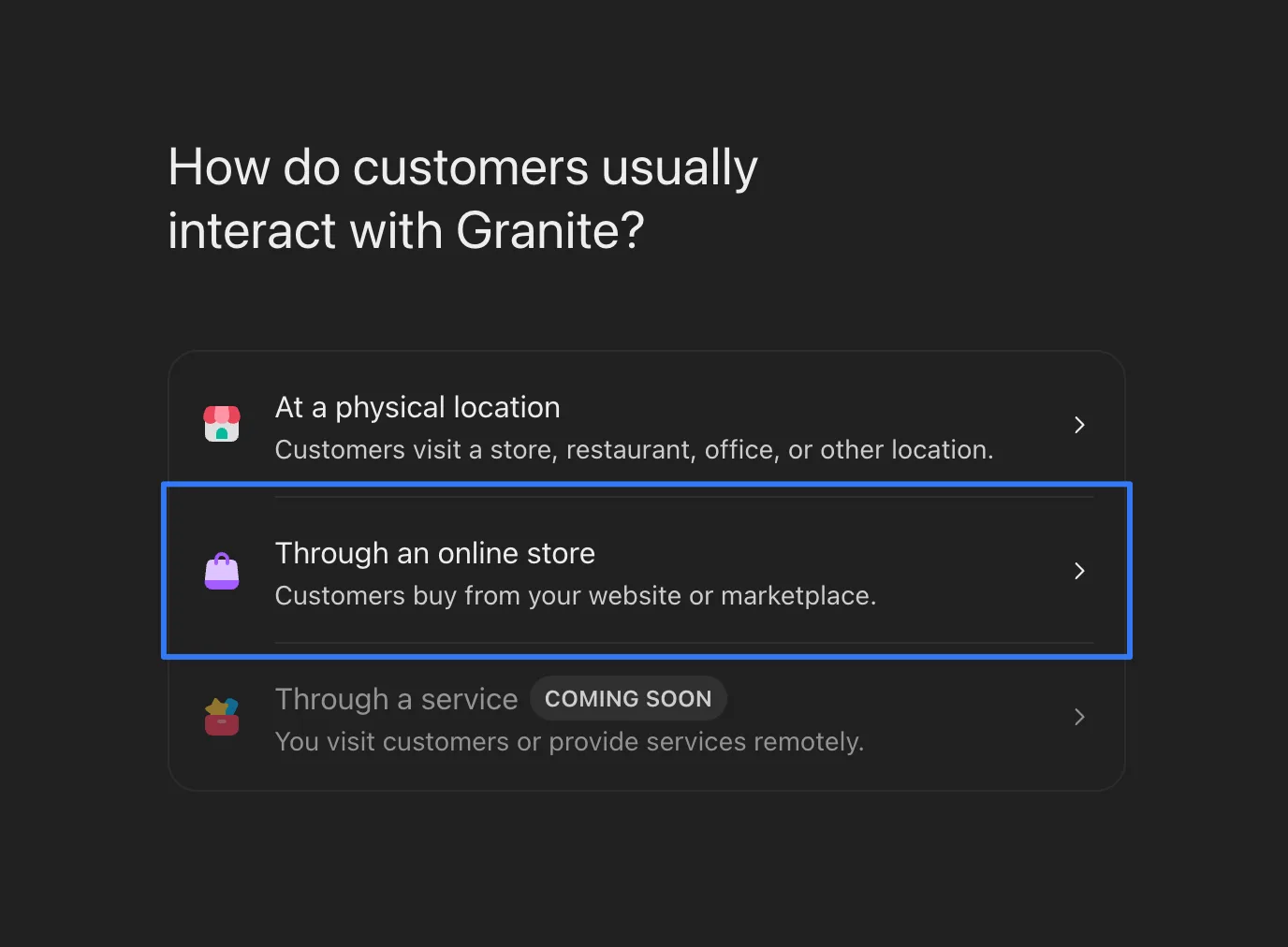
- Pick “Through an online store”It asks how customers usually deal with you: at a physical location, through an online store or through a service. The service option isn’t open yet, so a software or online service company picks online store.
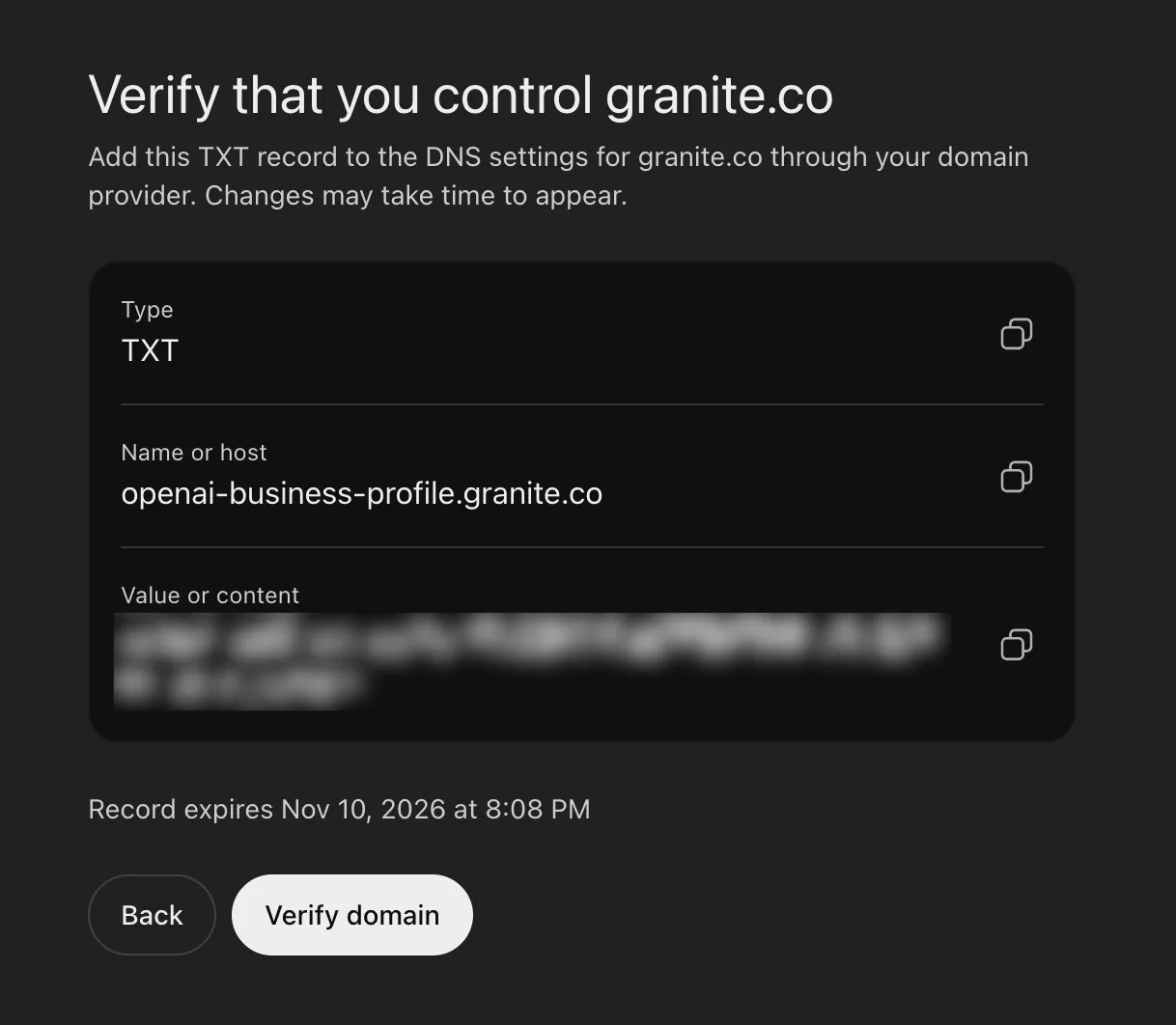
- Add your website and verify the domainEnter your site’s address, then add the TXT record it gives you at your DNS provider. The record’s name starts with openai-business-profile. It has an expiry time, so add it right away, then click Verify domain.
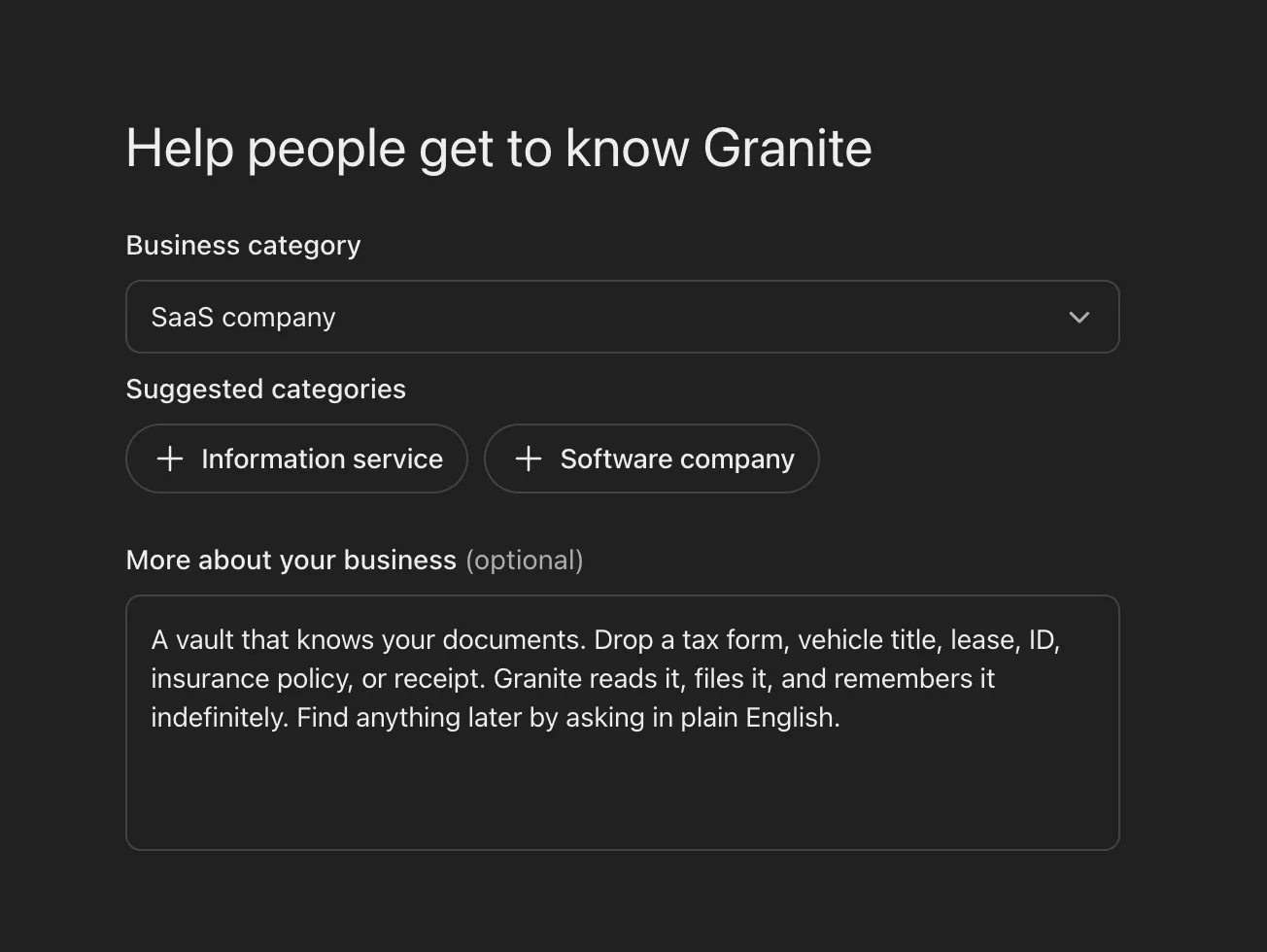
- Pick a categoryThere are a lot of categories, so choose the most specific one. The box to describe your business is optional.
- Add contact details and policiesPhone and email are optional. Because you picked online store, it asks for a delivery and return policy. Pick what fits: with nothing to ship, we chose free delivery and free returns.
- Verify your identityOpenAI asks for a government-issued ID before you can edit business info or publish your business agent, and it checks the business entity too, not only you. The first two businesses we added, where the legal entity’s name matched the business name, were verified within 5 minutes. Sites owned by a holding company are taking longer.

Once you’re verified, you can edit your details and invite teammates as admins.
What can you skip?
An llms.txt file. SE Ranking looked at about 300,000 domains and found no link between having one and getting cited by AI. Google’s John Mueller said in April 2025 that, as far as he knew, none of the AI services had said they use it.
Schema tricks sold as a shortcut into ChatGPT. Plain words that answer the buyer’s question do the job.
How do you know it’s working?
Count, don’t spot-check. The same question can name you today and skip you tomorrow. So pick the questions your buyers ask, ask each one several times and track the share of answers that name you. Then add the counts only OpenAI has: Business Hub’s mentions and clicks.
That’s what we do for 30+ software companies. We track your buyers’ questions, write the pages their searches find and ship real changes to your site every day, each one checked before it goes live. It’s $2,000 a month. See pricing.